



How to Cross the Likoni Ferry on Foot
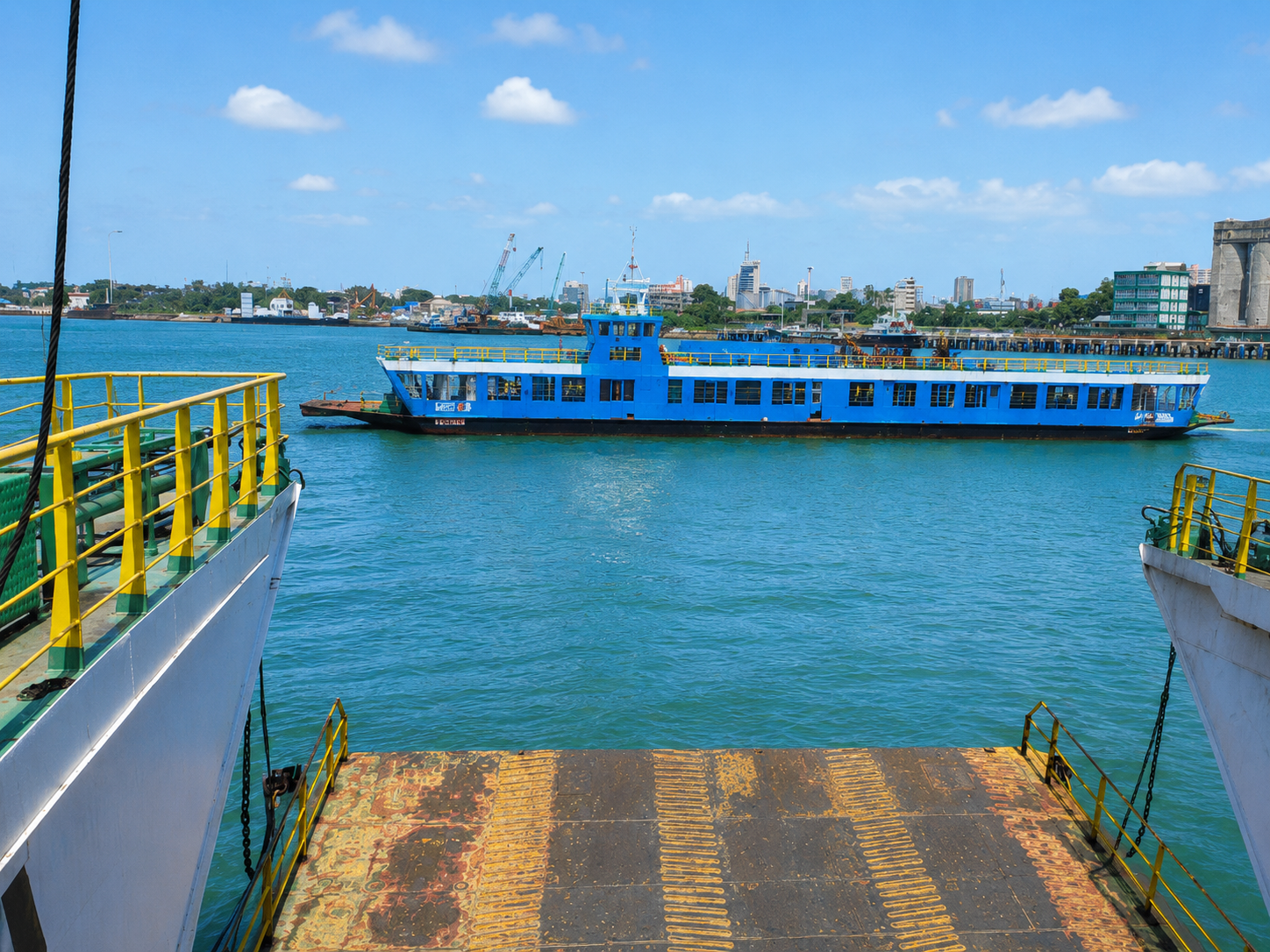
The Likoni Ferry is one of Mombasa’s most important crossings, linking Mombasa Island with Likoni and the wider South Coast route to Ukunda, Diani, Tiwi and Kwale.
The crossing operates under Kenya Ports Authority ferry services and remains the main pedestrian link between Mombasa Island and Likoni.
The water crossing itself is short, roughly 500 metres but the experience can feel confusing if it is your first time. There is no fixed passenger timetable; ferries operate in rotation throughout the day and night, so your waiting time depends on crowds, vehicle traffic, weather and how many vessels are running. The ferry area is busy, vehicles move in separate lanes, pedestrians gather in large numbers, security checks are required, and once the gates open, people move quickly towards the vessel.
This is not a small tourist transfer. It is a working commuter crossing used daily by residents, workers, traders, students, vehicles and travellers heading between Mombasa Island and the South Coast.
Crossing on foot is simple once you understand the flow. Pedestrians cross for free, the ferry ride only takes a few minutes, and the main thing is knowing where to enter, where to wait, how to move with the crowd, and where to find the right matatu once you reach the mainland side.
1. Getting to the Island-Side Ferry Terminal
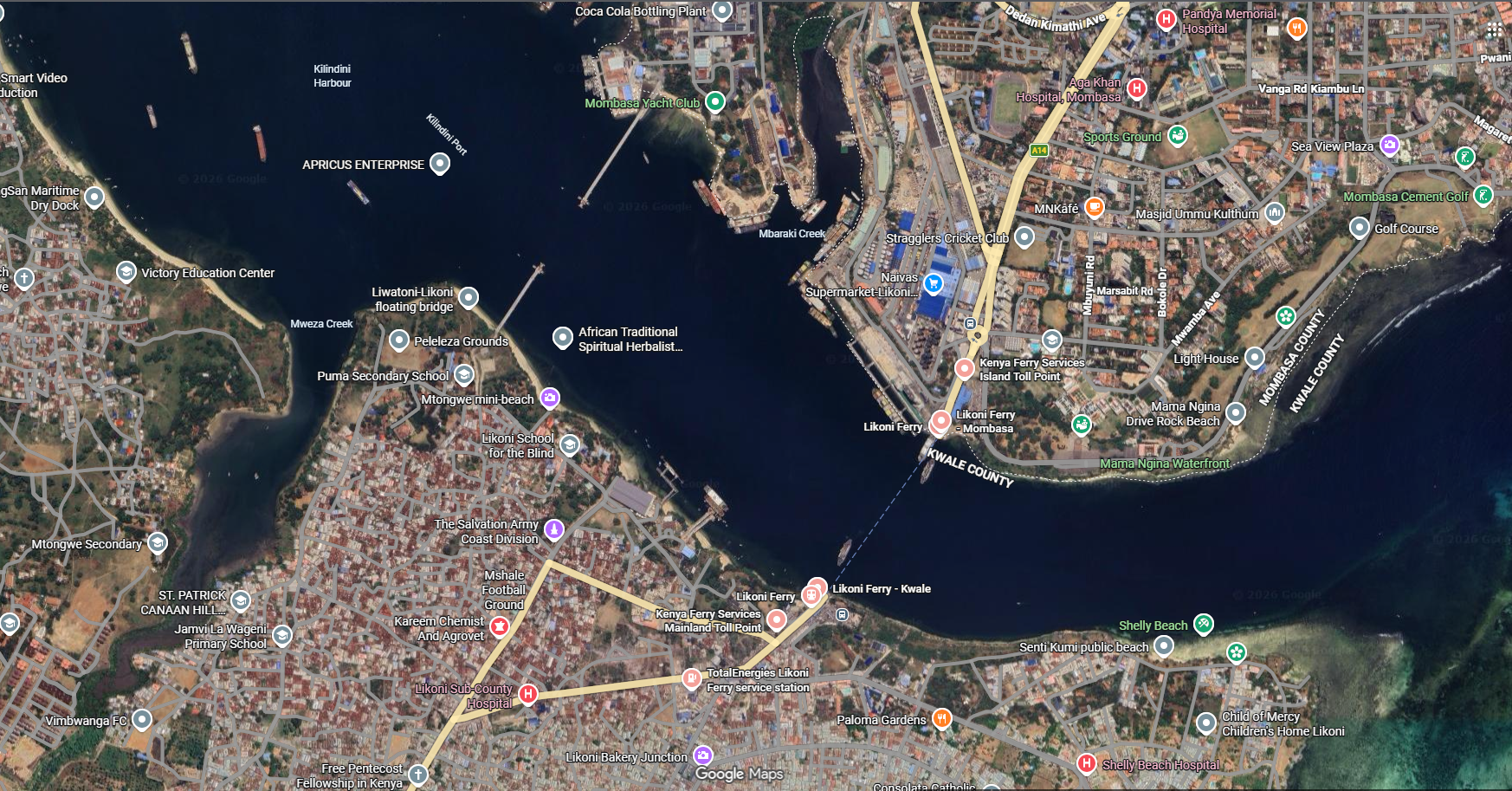
If you are starting from Mombasa Island, your journey begins by getting to the Likoni Ferry terminal.
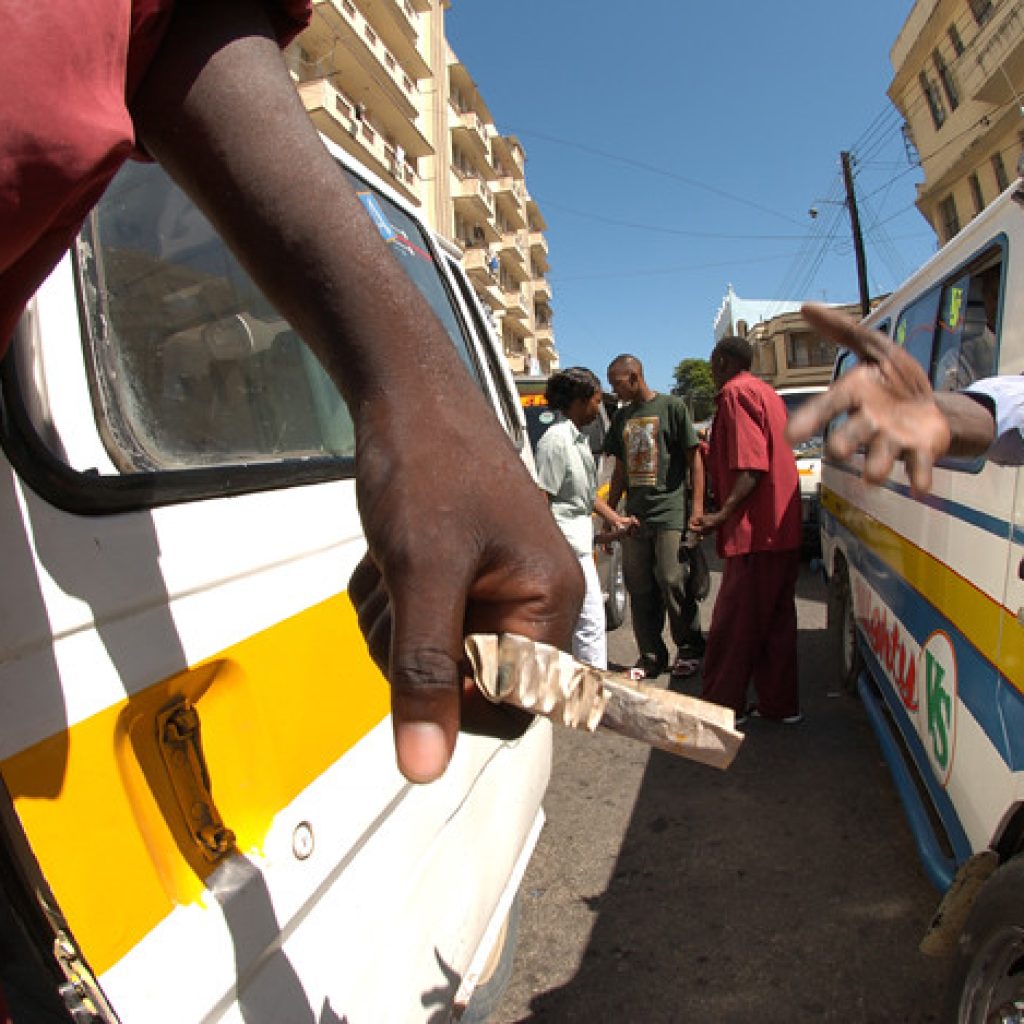
From the Mombasa CBD, look for matatus heading towards Likoni or Ferry. Common boarding areas include Digo Road, Posta and nearby CBD stages. Before getting in, confirm with the conductor that the matatu is going to the ferry.
The matatu will take you down towards Nyerere Road and drop you near the ferry approach, close to Likoni Mall. From there, it is a short walk towards the pedestrian entrance and security screening area.
If you are crossing with a private car, taxi, tuk-tuk or motorcycle, vehicle tolls apply and payment is handled separately through the cashless ferry payment system. If you are taking a taxi, airport transfer or private vehicle across the ferry, ask whether the ferry toll and waiting time are already included in the quoted fare. Pedestrians cross free.
Cost from Mombasa CBD to the ferry
From Mombasa CBD to the Likoni Ferry area, the normal matatu fare is usually around KSh 30, though it can rise to about KSh 50 during heavy rain, traffic disruption or the evening rush hour. Keep loose change ready, as it makes boarding easier and avoids unnecessary delays when paying the conductor. If you are new to Mombasa, ask clearly for “Ferry” or “Likoni Ferry” before boarding. If you are carrying luggage, choose a seat where you can keep your bag close and still exit without struggling through the matatu.
2. Passing Through Security
Before entering the pedestrian waiting area, everyone passes through security. Pedestrians do not pay to cross, but bags may be checked, especially larger or bulky luggage. On quiet days, the process is usually quick; during peak hours, the line can slow down as officers carry out manual checks or pull travellers aside for closer inspection. Keep your bag easy to open and close so you can move through without delaying yourself or others.
Do not take photos or videos around the terminal, ferry gates, security areas or boarding points. The ferry is a sensitive crossing, and filming can attract attention from security officers.
What to expect
Before entering the waiting area, security officers may ask to check your bag. Small bags are usually checked quickly, while larger luggage may take a little longer. During busy hours, this can slow the queue down, so keep your phone, wallet and travel documents secure and avoid opening your bag unnecessarily in the middle of the crowd.
Prepare before you reach the front of the line. If your bag needs to be checked, make it easy to open and close. Once you are through security, move into the waiting bay and keep your belongings close.
3. Waiting in the Pedestrian Bay
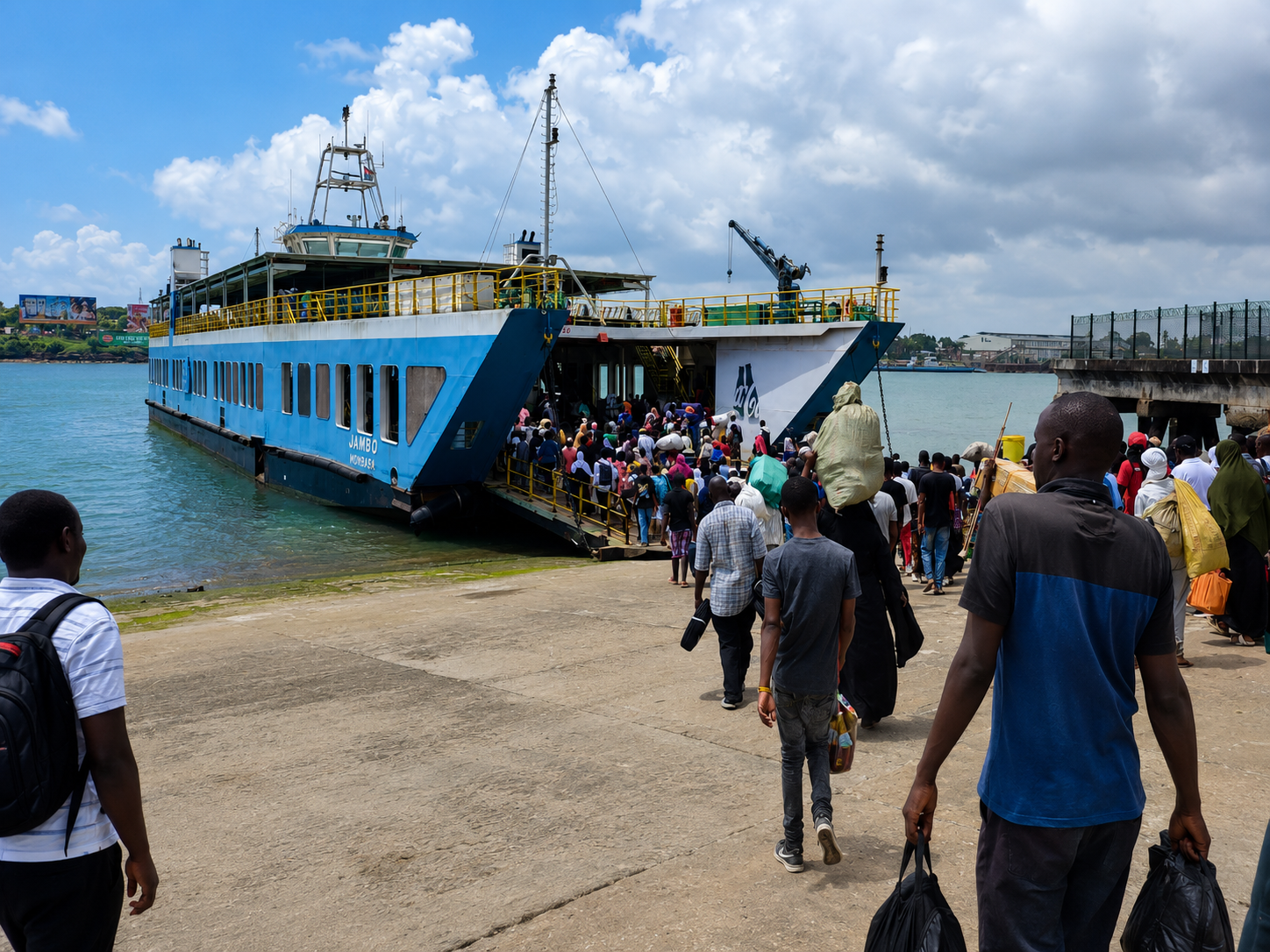
After security, you enter the covered pedestrian waiting bay. This is usually the busiest part of the crossing. During peak hours, hundreds of people may wait behind the gates until the next ferry is ready for boarding. Once the gates open, the crowd moves quickly down the ramp towards the vessel. If you are not in a hurry, you do not need to compete with the first rush. Stand slightly back or use the concrete benches, then follow once the first wave has moved. In many cases, you will still board the same ferry, but with less pushing and less pressure.
Busiest times
The busiest times are early morning and evening. The morning rush is usually between 6:00 a.m. and 9:00 a.m., when people are travelling to work, school and town. The evening rush usually builds from around 4:30 p.m. to 8:00 p.m., especially as people return towards Likoni and the South Coast.
Expect heavier crowds on Fridays, weekends, public holidays and during school travel seasons, when more people are moving with luggage, children or shopping.

Best approach for first-time travellers
- Do not stand pressed against the front gate unless you are comfortable in a dense crowd.
- Stay slightly to the side or towards the back.
- Keep your bag in front of you.
- Move with the crowd once it starts flowing.
- Do not stop suddenly on the ramp.
Please note that the Liwatoni Floating Bridge is no longer in use, so pedestrians crossing between Mombasa Island and Likoni now rely on the main Likoni Ferry terminal. The bridge was withdrawn after concerns that it interfered with port navigation and shipping operations, so visitors should not plan around it as an alternative crossing. This is one reason the pedestrian bay can feel very busy during peak hours.
4. Boarding the Ferry
When the gates open, pedestrians walk down the concrete ramp and onto the ferry. Vehicles use the central lanes, so keep to the side walkways unless ferry staff direct you otherwise. Once on board, move calmly to the pedestrian areas along the sides of the vessel. If you want air and views, stand near the outer railings, where you may catch views of Kilindini Harbour, passing vessels and the busy channel. Avoid standing too close to the engine areas, especially when the ferry is crowded, as the heat can feel intense in humid weather.
Use the pedestrian walkways on the left or right side of the ferry and avoid standing in the vehicle lanes. If the deck is wet or crowded, hold the rail as you move, avoid areas that feel too hot or packed, and keep your bag zipped and close to your body. The crossing itself is short, usually around 5–10 minutes once the ferry leaves the ramp, but the waiting and boarding process often takes longer than the ride across the channel.
The ferry is used safely by thousands of people every day, but the busiest moments are when petty theft is most likely: in the waiting bay, during boarding, and when passengers crowd near the exit before docking. Keep your phone out of your back pocket, avoid displaying valuables, and carry your bag in front of you during the rush.
5. Understanding the Ramps and Tides
One thing first-time pedestrians often underestimate is the ramp. The angle between the terminal and the ferry changes with the tide: at some times of day, it feels easy to walk, while at low tide it can become much steeper, especially when boarding or leaving the vessel. This matters if you are carrying heavy luggage, travelling with children, walking with elderly relatives, or moving with limited mobility.
At low tide, take smaller steps and do not rush, especially if the ramp feels steep or crowded. Keep one hand free if possible, let faster commuters pass you, and be careful with rolling suitcases, as they can be awkward to control on the slope.
During rain, the ramps and metal surfaces can become slippery. Move slowly even if the crowd behind you is moving quickly. If you are carrying electronics, documents or luggage, protect them before entering the terminal, as rain can blow into the waiting areas from the sides.

6. Arriving on the Mainland Side
When the ferry docks on the Likoni mainland side, pedestrians move up the exit ramp and out through the terminal gates. This is where many first-time travellers get confused. There are local stages near the terminal, and the area can feel busy, especially during the day.
If you are only going somewhere within Likoni, use the nearby local stages. If you are continuing to Ukunda, Diani or the wider South Coast, do not board the first matatu you see unless you have confirmed where it is going. For Ukunda and Diani Junction, the better option is usually the Total Petrol Station stage.
7. Where to Board for Ukunda and Diani
Once you exit the mainland terminal, walk straight ahead towards the Total Petrol Station area. This is one of the most useful landmarks for travellers continuing south, as matatus heading towards Ukunda and Diani Junction are easier to find from there. Boarding at this stage can also save you from unnecessary local stops around Likoni.
Knowing the usual fare before you board helps you avoid being overcharged, especially if you look unfamiliar with the route. Ask the fare before the matatu leaves the stage, and agree on any extra luggage charge in advance.
Mainland transport options
For local Likoni stops, use the nearby local stages outside the terminal. For Ukunda or Diani Junction, walk to the Total Petrol Station stage. Always confirm the destination before boarding, ask the fare before the matatu leaves, and keep your luggage close until you are seated.
Fares from the mainland side
Approximate fares after exiting Likoni: local mainland stops such as Kona ya Shani, Likoni Flats or Shelly Beach Road usually cost around KSh 30–50. For Ukunda or Diani Junction, expect to pay around KSh 80–120. Fares can rise slightly depending on traffic, rain, time of day, crowding and luggage, so confirm the price before the matatu leaves the stage.
Luggage note
If you are travelling with large suitcases or bulky bags, the conductor may ask you to pay for extra space, especially if the luggage takes up a seat. Budget around KSh 50–100 extra for luggage space, and agree on this before the vehicle leaves the stage.

8. Crossing Early in the Morning
The ferry runs through the night, but the atmosphere changes depending on the hour. Between around 4:30 a.m. and 5:30 a.m., the crossing is often used by workers, loaders, market traders and early commuters. People move quickly, and some areas may still be dark. If you are crossing at this hour, keep your bag close, avoid using your phone unnecessarily, and move directly towards your next transport connection once you exit.
Early morning tips
If you are crossing very early in the morning or late at night, keep your luggage close to your body and use well-lit areas where possible. Avoid stopping in isolated spots, confirm your onward route before crossing, and do not experiment with shortcuts if you are unfamiliar with the area.
9. Crossing Late at Night
The ferry operates 24 hours a day, but a late-night crossing feels different from daytime travel. After around 11:00 p.m., crowds thin out, public transport becomes less predictable, and the area outside the terminal can feel quieter. Ferry frequency may also reduce late at night, so waiting times can vary.
For first-time travellers, the bigger issue is usually not the ferry itself, but finding safe and reliable onward transport once you reach the mainland side. Matatus may still be available, but they are less reliable after 11:00 p.m. Fares can rise, waiting times can stretch, and routes may not run as smoothly as they do during the day.
If you are arriving late and continuing to Ukunda, Diani or another South Coast destination, pre-arrange your transport before crossing. Use a trusted local taxi, known driver or ride-hailing app, and ask your driver to wait near a well-lit landmark such as the Total Petrol Station area. Avoid lingering outside the terminal or negotiating long-distance transport in the dark if you are unfamiliar with the area.
10. Crossing During Rain
Rain changes the ferry experience quickly. The waiting bays are covered, but they are open on the sides, so strong coastal rain and wind can still push water into the waiting areas. Passengers may crowd into the drier sections, and the ramps, walkways and ferry deck can become slippery.
Protect electronics, documents and luggage before entering the terminal, especially during heavy rain. Keep important items in a waterproof pouch or inner pocket, wear shoes with grip, and avoid running on the ramp. If the boarding area looks slippery or crowded, let the first rush pass before moving forward. Keep one hand free if you are carrying luggage, and give yourself extra time because movement becomes slower and less comfortable in wet weather.

What If You Want to Avoid the Ferry?
If you are travelling by private car, taxi or airport transfer, you may also reach the South Coast via the Dongo Kundu Bypass. This road route avoids the Likoni Ferry altogether and can be more predictable during heavy ferry congestion, especially for drivers heading between Moi International Airport, the SGR station, Ukunda or Diani.
For pedestrians and budget travellers, however, the Likoni Ferry remains the most direct and affordable crossing. Pedestrians cross for free, while private cars, taxis, tuk-tuks and motorcycles pay vehicle charges separately. If you are crossing on foot and continuing by matatu, Likoni is still the route most travellers will use.
Do not confuse the Likoni Ferry with the Mtongwe ferry service. Mtongwe is a separate crossing and is not the usual route for pedestrians heading from Mombasa Island towards Ukunda, Diani, Tiwi or Kwale by matatu.
At the time of writing, first-time pedestrians should plan around the Likoni Ferry system. A new ferry has been announced, and the long-term Mombasa Gate Bridge project may change South Coast access in future, but until those changes are fully operational, Likoni remains the main pedestrian crossing between Mombasa Island and the Likoni side.
Quick Reference: Likoni Ferry for Pedestrians
| Item | Island Side: Mombasa | Mainland Side: Likoni / Kwale Direction |
|---|---|---|
| Main landmark | Likoni Mall / Nyerere Road area | Total Petrol Station |
| Local matatu fare | KSh 30–50 from CBD to ferry | KSh 30–50 to nearby Likoni stops |
| Long-distance fare | Not applicable | KSh 80–120 to Ukunda / Diani Junction |
| Pedestrian ferry fee | Free | Free |
| Large luggage | Keep close during boarding | Extra KSh 50–100 may be charged for seat space |
| Late-night transport | CBD matatus may still be available | Public transport becomes less reliable after 11:00 p.m. |
| Main caution area | Security queue, waiting bay and boarding ramp | Exit ramp and mainland stages |
| Best landmark for onward travel | Ferry terminal | Total Petrol Station |
Who Should Use the Ferry on Foot?
The pedestrian ferry is best for budget travellers, solo travellers, locals, backpackers, SGR arrivals travelling light, and visitors who are comfortable moving through busy public transport spaces. It is also useful if you are heading to Ukunda, Diani or the wider South Coast without a private car and want to keep transport costs low.
It may be less ideal if you are travelling with very heavy luggage, small children, elderly relatives, or anyone with mobility challenges, especially during peak hours, low tide or heavy rain. In those cases, try to cross at a quieter time if possible, or arrange private transport instead.
Final Tips Before You Cross
Crossing the Likoni Ferry on foot is free, practical and manageable. The main challenge is not the ferry ride itself, but the movement around it: getting to the right entrance, passing security, waiting calmly, boarding safely, and finding the correct stage on the other side.
Travel light if you can, keep your valuables secure, and avoid taking photos or videos around the terminal. Do not rush with the first wave of commuters unless you are confident in crowds. If you are continuing to Ukunda or Diani, use the Total Petrol Station stage, and if you are crossing late at night, arrange your onward transport in advance.
Once you understand the rhythm, the Likoni Ferry becomes much less intimidating. It is simply part of how Mombasa moves: busy, essential, imperfect and deeply woven into everyday travel between the island and the South Coast.