St. Francis Xavier Chapel
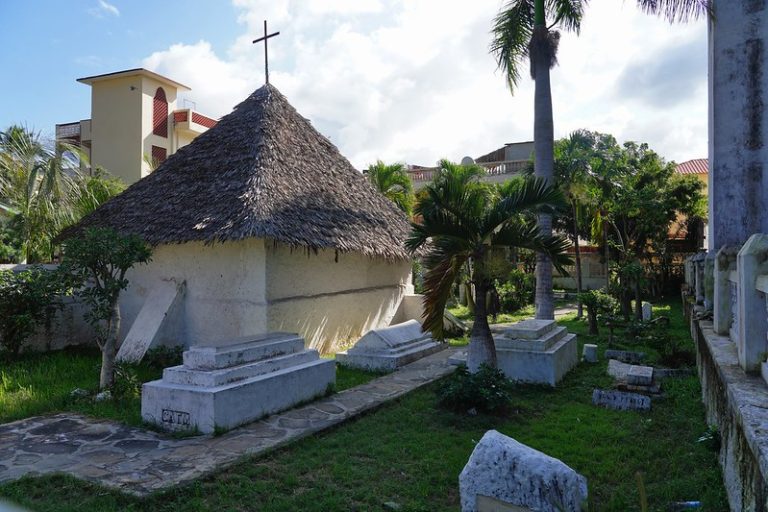
St. Francis Xavier Chapel stands on the seafront in the Shella area of Malindi, about 100 meters from the waterline on Mama Ngina Road in Old Town. For over five centuries, this chapel has served as a revered sanctuary for Christians, especially Catholics, seeking a spiritually uplifting experience.In 1498, Vasco da Gama, renowned for his voyages from Europe to India, arrived in Malindi and left a group of soldiers to build the St. Francis Xavier Chapel. This momentous journey marked the discovery of the sea route connecting Europe and Asia.Guided by a Gujerati navigator, Vasco da Gama found refuge in the friendly Malindi after facing hostility in Mombasa, where he looted unarmed Arab merchant ships. Notably, this voyage took place over three centuries before Dr. John Ludwig Krapf’s arrival in Mombasa in 1844. St. Francis Xavier Chapel was declared a national monument in 1935 and is carefully preserved by the National Museums of Kenya (NMK).Unique from traditional churches, it lacks a resident pastor or a permanent congregation, sparking debates among religious leaders. Nonetheless, the Catholic Church recognizes its significance as the first Christian place of worship in Kenya. While St. Paul Church in Rabai, holds the distinction of being the oldest church in Kenya, St. Francis Xavier Chapel remains a significant Christian shrine, attracting hundreds of worshippers during the annual feast of St. Francis Xavier on December 3. The chapel gained international recognition due to Xavier’s requiem mass held in 1541 for two sailors who perished on their voyage to India. Vasco da Gama strategically built the chapel in Malindi, a town engaged in a war with the Omani rulers of Mombasa, forming an alliance based on mutual interests. The chapel’s connection to St. Francis Xavier, a key figure in spreading Christianity, further solidifies its historical importance. After the Portuguese departed from Malindi in 1593, the chapel’s history faced obscurity. However, between the 17th and 19th centuries, Malindi experienced decline and near abandonment before regaining prominence. The chapel’s graveyard hosts the final resting place of notable figures, including J. Bill Smith, the first Malindi District Commissioner, and Frank Matthew, the son of a pioneering tea grower in Kericho. Inside, an altar with Catholic religious paraphernalia, two chairs, and eight wooden benches on a cemented floor can accommodate around 40 seated and 50 to 60 standing individuals. St. Francis Xavier Chapel continues to welcome pilgrims and visitors, inspiring reverence for centuries to come. Its storied past pays tribute to St. Francis Xavier, the Apostle of the Indies, who passed away on December 3, 1552, with a desire to extend his missionary work to China. His beatification and canonization further honour his profound impact on the spread of Christianity. As the chapel stands as a living testament to faith and legacy, its significance remains deeply etched in the heart of Malindi’s history. Opening Hours St. Francis Xavier Chapel is accessible to visitors from Monday to Friday between 6 am to 6 pm. Admission Fee to St. Francis Xavier Chapel To explore this remarkable historical landmark and gain access to four national monuments, including The Vasco da Gama Pillar, House of Columns, and Malindi Museum, guests can acquire a single ticket at the following prices:
Vasco da Gama Pillar
The Vasco da Gama Pillar, located on the shores of the Indian Ocean in Malindi, Kilifi County, is a historical marvel that has been attracting tourists for over six centuries. Erected in 1498 by the renowned Portuguese explorer, Vasco Da Gama, the pillar stands as a testament to his pioneering journey from Europe to India via Africa’s Cape of Good Hope. On two momentous voyages between 1497 and 1502, Vasco da Gama not only landed and traded with locals along the southern African coast but also reached the shores of India on May 20, 1498. Historical accounts suggest that Vasco da Gama constructed the pillar to aid his fellow sailors in finding their bearings towards India and also played a crucial role in promoting trade between India and Portugal. Serving as one of the oldest European cenotaphs on the East African coast, the Vasco da Gama Pillar once provided direction to those navigating the sea route to India. This pillar, resembling a lighthouse without lights, is believed to have been visible to Portuguese explorers as they approached Malindi’s shores from the vast sea. Adjacent to the pillar stands the Portuguese Chapel which served as a place of prayer and became the final resting place for those who passed away during their voyages. Having stood the test of time, the Vasco da Gama Pillar witnessed Malindi’s history evolve, including the British colonialists’ occupation under the British East Africa protectorate. Vasco Da Gama’s arrival in Malindi in 1498 was greeted warmly by the Sultan of Malindi, marking the beginning of connections between Europe, Africa, and the Middle East, particularly India. In the 15th Century, Portugal’s spirit of exploration spanned across the globe. King Dom Manuel of Portugal appointed Vasco da Gama in 1497 to lead a fleet of four ships on a voyage to India through the Far East. After numerous adventures, the fleet anchored off Malindi on Easter Sunday, April 15th, 1498, where they were heartily welcomed by the Sultan. In response to Vasco da Gama’s request, the Sultan provided a skilled sea captain, Ibn Majid, who guided the fleet across the vast Indian Ocean to Calicut, India. Vasco da Gama’s favorable reception during his first visit likely led him to return to Malindi during his voyage back in 1499. On this occasion, his sailors were permitted to erect a pillar topped with a cross bearing Portugal’s Coat of Arms. Unfortunately, the presence of this Christian symbol caused dissatisfaction among the Muslim community, leading to its removal. However, representation from the small Portuguese community, which had established a trading post in Malindi, eventually persuaded the Sultan to permit the construction of a pillar at its current location to hold the cross. This pillar, known as the original Padrao, is the sole remaining one out of several placed along the African coastline by various Portuguese seafarers. Over time, the exposed location of the pillar led to weathering and erosion. In 1973, Captain Malcom of HMS Briton arranged for the protective concrete cone to be built, concealing the original pillar while supporting the limestone cross. This limestone was confirmed to be from Portugal upon examination. Declared a gazette National Monument in 1935, the Vasco da Gama Pillar now falls under the watchful care of the National Museums of Kenya. NMK has undertaken various restoration efforts, including reinforcing the sea wall, paving the access road, and providing amenities like parapet walkways, an ablution block, and a pavement to ensure an enhanced tourist experience, including easy access for people with disabilities. Operating Hours The Vasco da Gama Pillar is open daily from 6 am to 6 pm. Admission Fee to the Vasco da Gama Pillar To explore this remarkable historical landmark and gain access to four national monuments, including the Portuguese Chapel, House of Columns, and Malindi Museum, guests can acquire a single ticket at the following prices: