
Mombasa Airbnb Hosts Face New Revenue Obligations

Mombasa Airbnb Hosts Face New Revenue Obligations Home-stay operators, commonly referred to as Airbnb hosts, in Mombasa are now facing the prospect of taxation, as the County government makes a move to integrate them into its revenue framework. Mombasa Governor Abdulswamad Nassir has expressed his belief that Airbnb proprietors should contribute to local taxes in a manner similar to traditional hotel establishments. Nassir stated, “Equity in business operations is essential. With guesthouses and lodges already paying licensing fees, it is only fair for Airbnb operators to also contribute levies to the Mombasa County government.” He conveyed this message during a meeting with stakeholders in the hospitality sector. These remarks follow closely on the heels of initiatives by the Tourism Fund to enlist home-stay businesses into its registry, as it was discovered that approximately 40,000 Airbnb hosts operate in Kenya, whereas only 400 have been officially registered. The national government, acting through the Tourism Fund, intends to impose a two-percent levy on Airbnb operators. David Mwangi, the CEO of the Fund, revealed that discussions have been ongoing with Airbnb Africa’s office to ensure that all hosts on the platform are both informed and registered. Mr. Mwangi emphasized, “We urge all hosts to acknowledge that they provide accommodation services and are, consequently, legally obliged to register and remit the two percent levy.” He made this statement during a meeting with officials from the North Rift Economic Bloc (Noreb) counties. For a substantial period, hoteliers have voiced their grievances regarding the high taxation burden they bear, while Airbnb businesses have operated relatively tax-free due to a lack of regulatory oversight. Hospitality industry investors argue that the nation has been losing significant revenue as more Kenyan citizens opt for opulent Airbnb accommodations over conventional hotels. Notably, regions such as Diani, Mombasa, and Kilifi feature luxurious beachfront Airbnb offerings with daily rates that can reach up to Sh100,000, depending on the available amenities.

Read More

Best Islands in Kenya

Discover the top five islands in Kenya you must visit in 2025

Read More

Flydubai launches new Mombasa route

Flydubai launches new Mombasa route Low-cost carrier Flydubai has announced that it plans to commence services between Dubai and Mombasa, Kenya, starting on January 17, 2024. The airline revealed that the service will operate four times a week, with flights scheduled for Mondays, Wednesdays, Fridays, and Sundays. Furthermore, it was disclosed that Emirates would also have a codeshare arrangement on this route, enabling passengers to have access to additional travel options departing from Dubai, thus improving connectivity to various global destinations. The new route will take travelers from Dubai International’s (DXB) Terminal 3 to Moi International Airport (MBA) in Mombasa. This notable addition extends Flydubai’s African network, with Mombasa becoming the 11th destination on their African route map. The network already covers 10 countries, encompassing significant cities such as Addis Ababa, Alexandria, Asmara, Dar es Salaam, and Zanzibar, among others. Flydubai’s CEO, Ghaith Al Ghaith, expressed confidence in the potential of the African market and anticipated robust demand for this route. He emphasized that Dubai has become increasingly attractive as an investment hub for African companies, citing the registration of more than 26,000 African companies with Dubai Chamber since Expo 2020. Al Ghaith remarked, “Our direct flights to Mombasa, set to begin in January, coupled with our expanding presence in Africa, would further strengthen trade and tourism ties between the United Arab Emirates and the East African markets.”

Read More

Vasco da Gama Pillar

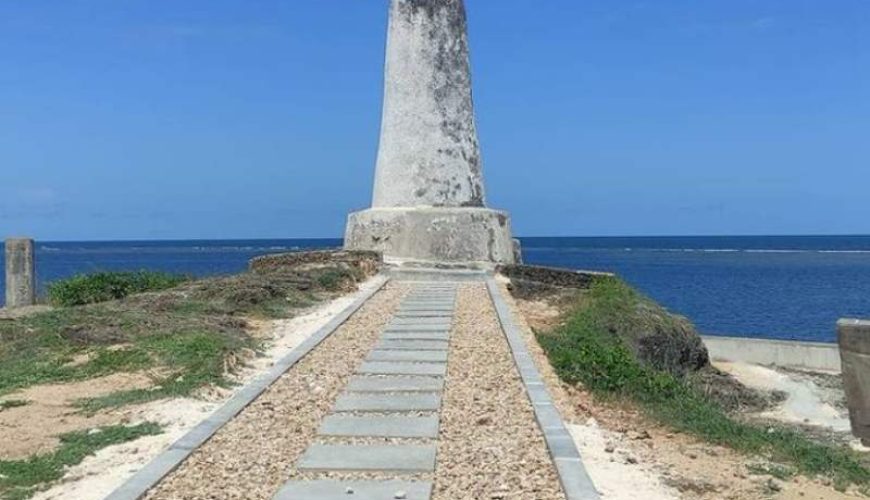
The Vasco da Gama Pillar, located on the shores of the Indian Ocean in Malindi, Kilifi County, is a historical marvel that has been attracting tourists for over six centuries. Erected in 1498 by the renowned Portuguese explorer, Vasco Da Gama, the pillar stands as a testament to his pioneering journey from Europe to India via Africa’s Cape of Good Hope. On two momentous voyages between 1497 and 1502, Vasco da Gama not only landed and traded with locals along the southern African coast but also reached the shores of India on May 20, 1498. Historical accounts suggest that Vasco da Gama constructed the pillar to aid his fellow sailors in finding their bearings towards India and also played a crucial role in promoting trade between India and Portugal. Serving as one of the oldest European cenotaphs on the East African coast, the Vasco da Gama Pillar once provided direction to those navigating the sea route to India. This pillar, resembling a lighthouse without lights, is believed to have been visible to Portuguese explorers as they approached Malindi’s shores from the vast sea. Adjacent to the pillar stands the Portuguese Chapel which served as a place of prayer and became the final resting place for those who passed away during their voyages. Having stood the test of time, the Vasco da Gama Pillar witnessed Malindi’s history evolve, including the British colonialists’ occupation under the British East Africa protectorate. Vasco Da Gama’s arrival in Malindi in 1498 was greeted warmly by the Sultan of Malindi, marking the beginning of connections between Europe, Africa, and the Middle East, particularly India. In the 15th Century, Portugal’s spirit of exploration spanned across the globe. King Dom Manuel of Portugal appointed Vasco da Gama in 1497 to lead a fleet of four ships on a voyage to India through the Far East. After numerous adventures, the fleet anchored off Malindi on Easter Sunday, April 15th, 1498, where they were heartily welcomed by the Sultan. In response to Vasco da Gama’s request, the Sultan provided a skilled sea captain, Ibn Majid, who guided the fleet across the vast Indian Ocean to Calicut, India. Vasco da Gama’s favorable reception during his first visit likely led him to return to Malindi during his voyage back in 1499. On this occasion, his sailors were permitted to erect a pillar topped with a cross bearing Portugal’s Coat of Arms. Unfortunately, the presence of this Christian symbol caused dissatisfaction among the Muslim community, leading to its removal. However, representation from the small Portuguese community, which had established a trading post in Malindi, eventually persuaded the Sultan to permit the construction of a pillar at its current location to hold the cross. This pillar, known as the original Padrao, is the sole remaining one out of several placed along the African coastline by various Portuguese seafarers. Over time, the exposed location of the pillar led to weathering and erosion. In 1973, Captain Malcom of HMS Briton arranged for the protective concrete cone to be built, concealing the original pillar while supporting the limestone cross. This limestone was confirmed to be from Portugal upon examination. Declared a gazette National Monument in 1935, the Vasco da Gama Pillar now falls under the watchful care of the National Museums of Kenya. NMK has undertaken various restoration efforts, including reinforcing the sea wall, paving the access road, and providing amenities like parapet walkways, an ablution block, and a pavement to ensure an enhanced tourist experience, including easy access for people with disabilities. Operating Hours The Vasco da Gama Pillar is open daily from 6 am to 6 pm. Admission Fee to the Vasco da Gama Pillar To explore this remarkable historical landmark and gain access to four national monuments, including the Portuguese Chapel, House of Columns, and Malindi Museum, guests can acquire a single ticket at the following prices:

Read More

The Whale Watching Season Begins

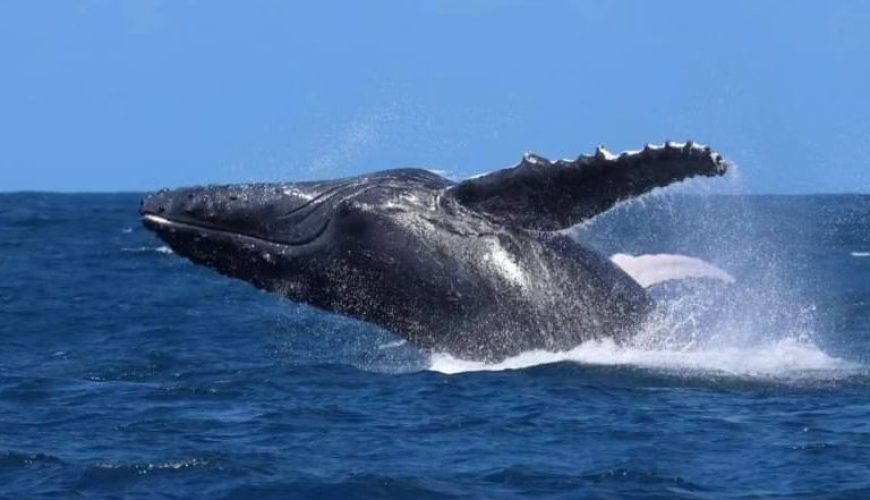
The Spectacular whale watching Season Begins in Kenya’s Coastal Waters As the famous wildebeest herds bravely embark on their extraordinary journey, crossing the treacherous Mara River and facing dangers from crocodiles and strong currents, another equally remarkable migration silently unfolds beneath the waves. Majestic giants of the marine world, humpback whales gracefully glide from Antarctica, spanning approximately 5,000 kilometers, to make their way to the warm waters of Kenya’s coastline. This epic migration requires the whales to navigate treacherous ocean currents, evade predators, and endure a long, foodless journey. However, their determination and instinct propel them forward, mirroring the same tenacity displayed by the wildebeest on land. The humpback whales’ arrival in Kenya’s waters coincides with the peak season of the Great Migration, creating a harmonious display of migration on both land and sea, commonly known as the Twin Migration. The Great Migration itself is a spectacle of extraordinary proportions. With over 1.5 million wildebeest accompanied by zebras and gazelles, it covers an impressive distance of 1,800 miles (2,900 kilometers) from Tanzania to Kenya’s Masai Mara. These animals face constant risks, from surviving on vast savannahs to navigating perilous river crossings while constantly under the threat of predators. In Watamu, the arrival of humpback whales is a major highlight of the marine calendar. Weighing up to 30 tonnes and measuring 15 meters in length, these majestic marine giants undertake a remarkable voyage to reach the tranquil tropical waters of Watamu. Here, they find an ideal environment for breeding, feeding, and socializing, thanks to the abundance of food resources and opportunities for courtship behaviors. The coastal town of Watamu, located just 140 kilometers north of Mombasa, offers the perfect vantage point to witness these magnificent creatures. The Malindi Watamu National Marine Park and Reserve, along with Ngomeni, a coastal town just north of the park, serve as ideal locations to catch a glimpse of these gentle giants. The whale-watching season in Watamu begins in July and typically reaches its peak between August and October when humpback whales grace the shores of Kenya. These months offer the perfect window to witness humpback whales leaping out of the water, sometimes in pairs or larger family groups, creating an awe-inspiring and unforgettable sight. Known for their acrobatic displays, humpback whales engage in activities such as leaping or “breaching” to communicate, play, or rid themselves of skin parasites, resulting in a captivating show for lucky observers. In addition to humpback whales, Kenya’s coastal region is also home to various species of dolphins. The Indo-Pacific bottlenose dolphins and humpback dolphins can be spotted throughout the year, while spinner dolphins make seasonal appearances in select locations. The Kisite-Mpunguti National Marine Park and Reserve and the Malindi Watamu National Marine Park and Reserve are key areas for dolphin watching, offering a chance to witness this fascinating marine spectacle. Thanks to the dedicated efforts of individuals like Jane Spilsbury, Watamu has witnessed the emergence of a flourishing marine tourism industry. Inspired by tales from local fishermen about dolphins and whales, Spilsbury and her husband embarked on a mission to help document and raise awareness about the marine life in the area. This endeavour led to the establishment of the Watamu Marine Association in 2007, a collaborative initiative involving hotels, fishermen, divers, and the public. Their continuous efforts have contributed to the preservation and conservation of dolphins and whales in the region, ensuring that future generations can continue to marvel at these incredible creatures. The synchronous presence of the wildebeest herds and humpback whales during their respective migrations creates a harmonious display of movement and life. Witnessing these two incredible phenomena is a testament to the wonders of nature and the interconnectedness of different ecosystems. If you haven’t visited Watamu yet, now is the perfect time to plan your trip to Kenya’s coastal region between the months of July and October. This period marks the low tourism season, presenting several advantages for visitors. The decreased number of tourists during this time allows for a more serene and personal encounter with nature. With fewer crowds, you can establish a deeper connection with the marine environment and witness the migrations undisturbed, creating a truly unforgettable experience. Furthermore, the low season brings the advantage of reduced prices for accommodations, tours, and activities. This affordability enables you to make the most of your trip to Watamu while keeping your budget in check. During these months, the weather in Watamu remains pleasantly warm, with average temperatures ranging from approximately 23 to 28 degrees Celsius (73 to 82 degrees Fahrenheit). Although there may be occasional showers, they are typically brief and have minimal impact on the overall experience. In fact, these refreshing rains can add a touch of rejuvenation and enhance the natural beauty of the coastal landscape.

Read More

Coast Public Transport Fare Hikes

The impact of the recent fuel price increase on public transport fares along the Coast. Learn how operators are responding to the hike, considering economic challenges while striving to sustain their services and meet customer needs.

Read More

Mombasa County Start-ups Awarded $50,000 (Sh7.2 million)

Mombasa County Start-ups Awarded $50,000 for Innovative Solutions to Combat Plastic Pollution

Read More

A Thrilling Fusion: Nightlife & Gospel at Samba Arena Club

Discover Mombasa’s Samba Arena Club, where nightlife and spirituality merge, offering a unique experience with gospel music and unconventional church services in Bamburi.

Read More

Mombasa Named Fourth Most Popular Destination for UK Holidaymakers

Mombasa, has been ranked as the fourth most popular holiday destination for UK tourists in the UK Post Office Holiday Costs Barometer. The city rose from seventh place last year to secure its position as a top choice for UK holidaymakers.

Read More

Serena Beach

.

Read More