

Still Time to Vote for Kenya Coast Nominees in World Travel Awards 2026

Kenya’s Coast has earned a strong place on the World Travel Awards 2026 shortlist, with hotels, resorts, villas and safari lodges from Diani, Mombasa, Watamu, Malindi, Kilifi and Taita Taveta nominated across several Kenya categories. Voting is open until 17 July, giving residents, travellers and supporters of coastal tourism a final window to back the region’s nominees. For the Coast, the nominations are more than a hospitality roll call. They reflect the range of a region that continues to shape Kenya’s travel identity, from family beach holidays and boutique escapes to conference tourism, private villas and safari stays linked to the Tsavo circuit. The strongest coastal showing is in Kenya’s Leading Beach Resort 2026, where the nominated properties include Baobab Beach Resort & Spa, Diamonds Malindi, Diani Reef Beach Resort & Spa, Diani Sea Resort, Hemingways Watamu, Kinondo Kwetu, Mnarani Beach Club, Ocean Sports Resort Watamu, PrideInn Flamingo Beach Resort & Spa, PrideInn Paradise Beach Resort, Sarova Whitesands Beach Resort & Spa, Swahili Beach and Voyager Beach Resort. Diani appears prominently across the list, with several properties nominated in beach, family, boutique and resort categories. Watamu is represented through names such as Hemingways Watamu, Ocean Sports Resort Watamu and Mnarani Beach Club, while Mombasa’s established resort scene is reflected through Sarova Whitesands, Voyager Beach Resort and PrideInn Paradise. The nominations also show the Coast’s wider tourism strength beyond beach holidays. PrideInn Paradise Beach Resort, Convention Centre & Spa is nominated in the conference hotel category, highlighting Mombasa’s role as a meetings and events destination. The Maji Beach Boutique Hotel is nominated in the boutique hotel category, while Diamonds Leisure Beach & Golf Resort, Hemingways Watamu, Kinondo Kwetu, Leopard Beach Resort & Spa and Sarova Whitesands Beach Resort & Spa appear in the resort category. Kilifi is represented through Sirai Beach in the luxury private villa category. Taita Taveta also features, with Salt Lick Safari Lodge and Taita Hills Safari Resort & Spa nominated in Kenya’s Leading Safari Lodge category. Together, the nominations underline what makes the Kenya Coast one of the country’s most complete travel regions. It is not only a beach destination. It is a place of heritage, ocean life, food, family travel, conferences, luxury stays and safari connections. Travellers will always judge a property by the experience they receive on the ground, but recognition of this kind helps keep the Coast visible in a competitive tourism market. Kenya Coast nominees featured Kenya’s Leading Beach Resort 2026: Baobab Beach Resort & Spa, Diamonds Malindi, Diani Reef Beach Resort & Spa, Diani Sea Resort, Hemingways Watamu, Kinondo Kwetu, Mnarani Beach Club, Ocean Sports Resort Watamu, PrideInn Flamingo Beach Resort & Spa, PrideInn Paradise Beach Resort, Sarova Whitesands Beach Resort & Spa, Swahili Beach and Voyager Beach Resort. Kenya’s Leading Family Resort 2026: Baobab Beach Resort & Spa, Mnarani Beach Club, Ocean Sports Resort Watamu, PrideInn Paradise Beach Resort, Sarova Whitesands Beach Resort & Spa and Southern Palms Beach Resort. Kenya’s Leading Conference Hotel 2026: PrideInn Paradise Beach Resort, Convention Centre & Spa. Kenya’s Leading Boutique Hotel 2026: The Maji Beach Boutique Hotel. Kenya’s Leading Resort 2026: Diamonds Leisure Beach & Golf Resort, Hemingways Watamu, Kinondo Kwetu, Leopard Beach Resort & Spa and Sarova Whitesands Beach Resort & Spa. Kenya’s Leading Luxury Private Villa 2026: Sirai Beach. Kenya’s Leading Safari Lodge 2026: Salt Lick Safari Lodge and Taita Hills Safari Resort & Spa. Voting is open through the official World Travel Awards portal until 17 July. To vote, readers need to register on the World Travel Awards website, verify their email address, log in, and select their preferred nominees in the Kenya categories. The official Kenya nominees page is here: World Travel Awards Kenya Nominees 2026 The voting portal is here: World Travel Awards Voting Portal
Read More

After Mombasa’s Ocean Moment, What Comes Next for Kenya’s Coast?

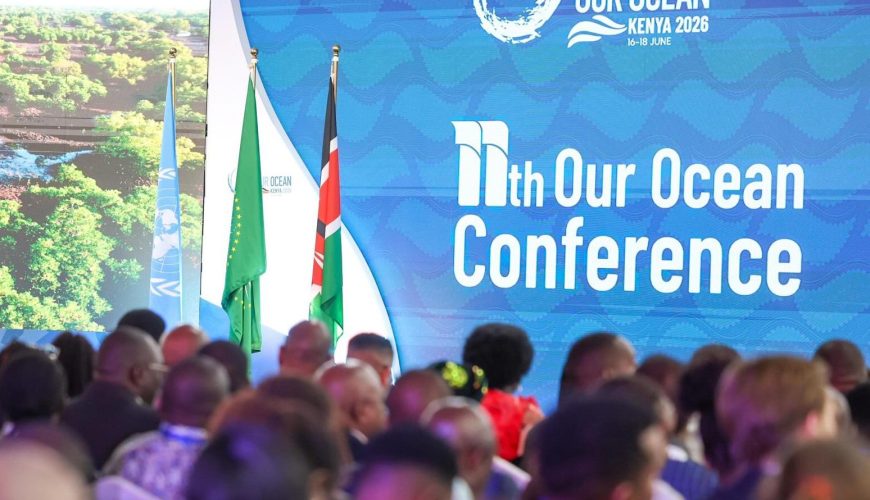
The Our Ocean Conference brought the world to Mombasa and produced billions of dollars in promises. But for Kenya’s Coast, the real story begins after the speeches, panels and official photos. For three days in June, Mombasa was not just a port city, a tourism gateway or the place travellers pass through on their way to Diani, Watamu, Kilifi or Lamu. It became the centre of a global conversation about the future of the ocean. The 11th Our Ocean Conference was held in Mombasa from 16 to 18 June 2026 under the theme “Our Ocean, Our Heritage, Our Future.” It was the first time the conference was hosted on African soil, placing Kenya’s Coast and the wider Western Indian Ocean closer to the centre of global ocean policy. That mattered because the ocean is not an abstract subject here. In Mombasa, the sea is part of ordinary life. It is the ferry crossing at Likoni, the fishing boats leaving before sunrise, the port channel, the seafood on local menus, the mangroves along creeks and shorelines, the plastic that washes back after heavy rain, the beach clean-ups after busy weekends, the reefs, the tides, the landing sites, the tourism economy and the families whose income depends on the water. So the question after the conference is not only how many leaders attended or how large the pledges sounded. The more important question is what those promises will mean for the Coast. The preliminary commitments report says the Mombasa conference produced 320 commitments, mobilising about USD 6.4 billion across 104 countries and organisations. The commitments were grouped under six areas: ocean-climate action, marine pollution, marine protected areas, maritime security, sustainable blue economy and sustainable fisheries. The Our Ocean Conference is not new. It began in 2014, launched by the U.S. Department of State under then Secretary of State John Kerry, with the aim of pushing ocean discussions beyond speeches and into public commitments. That idea still shapes the conference. Countries, organisations, businesses and civil society groups are expected to come with specific commitments — what they will do, when they will do it and how much they will invest. Kerry reminded delegates in Mombasa that the conference was designed around action, not general statements. He said the point was for people to come forward with “what they will do and when and how much it will cost.” Over the years, the conference has moved from country to country and become one of the main global gatherings for ocean protection, sustainable fisheries, marine pollution, climate resilience and the blue economy. Mombasa now sits inside that history. It was not just another host city. It was the first African host, and that gave the 2026 conference a different weight. For Kenya, the moment was not only about diplomacy. It placed an African coastal city, and the communities of the Western Indian Ocean, inside a global conversation that is often led by wealthier coastal nations. Kenya’s commitments The USD 6.4 billion announced in Mombasa was not all for Kenya. It includes commitments from governments, organisations and institutions around the world. But Kenya appears strongly throughout the preliminary report. As host country, the Government of Kenya made commitments across all six action areas. Taken together, the government commitments with stated financial values add up to just over USD 1 billion. Some commitments do not have a dollar figure attached, so it is more accurate to describe them as a set of commitments rather than money already sitting in project accounts. That distinction matters. A conference report is not the same as a completed project. It is a public list of promises. Some may move quickly. Some may take years. Some may change once implementation begins. Others may need pressure, tracking and public accountability before they are felt on the ground. Still, the Kenya commitments are important because many of them point directly to coastal places and coastal livelihoods: Mombasa and Lamu ports, Kwale’s seascapes, Shimoni, Vanga, Shela, Kilifi, Lamu Bay, mangroves, seagrass beds, fishing grounds and communities trying to earn from the ocean without exhausting it. Mangroves and seagrass moved to the centre of the conversation One of Kenya’s strongest commitments is around blue carbon, which refers to the carbon stored in coastal and marine ecosystems such as mangroves and seagrass. Kenya committed to developing its first National Blue Carbon Framework. It also committed to restoring, protecting and managing 61,000 hectares of mangroves and 39,000 hectares of seagrass by 2030. The same section of the report includes commitments on climate research, shoreline protection, saltwater intrusion, food security, marine early warning systems and support for vulnerable coastal communities. On paper, that sounds technical. On the Coast, it is very practical. Mangroves hold shorelines together. They act as nurseries for fish. They support crab and fishery livelihoods. They help protect communities from erosion and storm pressure. In many places, they are also part of how people understand home. Seagrass is easier to miss because most people do not see it from the road or the beach. But it matters too. It supports marine life, helps stabilise nearshore ecosystems and provides feeding grounds for species such as sea turtles. If these commitments are done well, they could support areas such as Lamu, Kilifi, Mida Creek, Diani, Vanga and other parts of the Coast where mangroves and seagrass already matter to livelihoods and marine biodiversity. But restoration is not just planting and taking photos. The bigger issue is management. Who is involved? Who is trained? Who is paid? Who monitors the sites after the launch event? Are communities part of the design from the beginning, or are they brought in after the project has already been decided? That is the difference between a coastal project that lasts and one that only looks good in a report. Mombasa and Lamu ports are now part of the pollution test Marine pollution was another major area, and this is where Mombasa appears very clearly. Kenya committed to establishing five coastal circular economy

Read More

New museum fees from May 7

If you’re planning to visit Fort Jesus, walk through Gede Ruins, or spend time in Lamu Town, entry fees are going up from May 7. The National Museums of Kenya has revised pricing across its sites, affecting three groups: Kenyan and East African citizens, residents of Africa, and international visitors from outside Africa. At Fort Jesus, Kenyan and East African citizens will now pay KSh 550 for adults and KSh 300 for children.Residents of Africa will pay USD 9 for adults and USD 6 for children.Visitors from outside Africa will pay USD 17 for adults and USD 8 for children. If you’re visiting both Fort Jesus and the Butterfly House, the combined ticket is now KSh 650 for adults and KSh 400 for children.Residents of Africa will pay USD 12 (adults) and USD 7 (children), while visitors from outside Africa will pay USD 19 and USD 9. Further up the coast, sites like Gede Ruins, Malindi Museum, Mnarani and Jumba Ruins remain more affordable.Kenyan and East African citizens will pay KSh 200 for adults and KSh 100 for children.Residents of Africa will pay USD 6 and USD 3, while visitors from outside Africa will pay USD 8 and USD 4. In Lamu, the combined ticket covering Lamu Museum, Lamu Fort, Swahili House and the German Post Office is now KSh 750 for adults and KSh 400 for children.Residents of Africa will pay USD 6 and USD 3, while visitors from outside Africa will pay USD 10 and USD 4. Smaller sites like Shimoni remain at the lower end, with Kenyan and East African citizens paying KSh 100 for adults and KSh 50 for children. The changes come under a new legal notice and are meant to support maintenance and conservation across the sites. Most places remain open daily from 8:30am to 5:30pm, so nothing about how you visit really changes — just the price you pay at the gate.

Read More

A Sunset Dhow in Lamu

Evenings in Lamu arrive without urgency. As the heat loosens its grip, the light softens, and the water begins to take on the work of ending the day. A sunset dhow ride is not treated as an attraction here. It is simply one of the ways the island moves from afternoon into night. As the dhow slips into the mangrove channels, the town recedes. There are no engines, no timetable to chase. The wind steadies the sail, and reflections stretch across the water as the shoreline darkens. What remains is motion without effort and a sense that nothing needs to be added. Lamu’s relationship with water shapes this rhythm. Founded in the 12th century, the island is home to Lamu Old Town, the oldest and best-preserved Swahili settlement in East Africa. Known historically as Amu, it is still reached only by boat, either by speedboat or traditional vessel from Mokowe Jetty. That separation continues to influence daily life, including how evenings unfold. Sunset dhows usually depart from Lamu Town or Shela. Most visitors arrange a sail through their hotel or guesthouse, which will recommend a trusted local captain. Others find operators waiting near the jetty. Arrangements are informal. A brief conversation is usually enough, and departures are guided more by light and tide than by strict scheduling. Once aboard, the dhow moves quietly through the channels as the sky begins to change colour. On request, captains may provide simple Swahili snacks such as samosas, served without ceremony. Guests are welcome to bring their own drinks, typically kept in a cooler box on deck. The experience itself is unstructured. There is little to do beyond sitting back, stretching out, and watching the shoreline slide past. Water moves through the mangrove roots. The sail shifts gently overhead. At low tide, the dhow may pause near open water, allowing confident swimmers to slip into the sea while the boat stays close by. Nothing is staged. Nothing is rushed. For those marking a birthday, anniversary, or proposal, a modest addition can be arranged in advance. A short message is tied to the dhow’s sail using cloth and revealed as the sail is raised, briefly carried by the wind before settling into view. Flowers and light celebratory snacks are included. The gesture is simple, visible across the water, and easily skipped by those who prefer an unadorned sail. The sailcloth message add-on costs approximately KSh 3,000. Shared sunset dhows are typically priced at KSh 2,500 per person. Private dhows for up to four guests cost approximately KSh 12,000 for residents and KSh 15,000 for non-residents, with additional guests charged at KSh 2,000 each. Snacks are included on private sails. The sailcloth message add-on costs approximately KSh 3,000. Most departures leave Lamu Town around 4:30 pm and Shela closer to 5:00 pm, depending on the tide and seasonal light. July to October and January to February offer the most reliable weather. March and April are quieter and better suited to travellers comfortable with occasional rain. It is worth remembering that Lamu is a conservative Muslim community. Modest dress is expected when moving through town and the surrounding villages. Swimwear is appropriate only at beaches, hotel pools, or out on the water. Courtesy here is quiet and mutual; observing first and following local cues goes a long way. Prices should always be agreed upon before departure. Special-occasion sails are best requested ahead of time, particularly on weekends and during high season, when availability narrows.

Read More

Discovering Mombasa, Step by Step

Walking Mombasa isn’t about clocking kilometres. It’s about what the city gives you when you’re slow enough to be noticed. A quick “Mambo! Vipi?” from someone passing. A jogger’s nod. A smile that happens and is gone before you can hold it. Walking gives you what no vehicle can: the inconvenience of having to notice everything. On foot, you catch the real layers — salt in the air when the wind behaves, dust when it doesn’t, diesel from harbour-bound lorries, and the comfort of chapatis frying on roadside griddles. You also learn the practical things: which verge disappears without warning, where trucks throw grit, where the sun hits hardest. Schoolchildren in crisp uniforms grin and call out, “Habari ya walking!” Vendors shout prices. A mechanic laughs too loudly at a joke you didn’t hear. People look up, register you, and for a minute you’re part of the flow. Mombasa wakes slowly. In the earliest hours, the streets of Miritini  a mainland suburb at the city’s edge are still. By mid-morning, matatus roar past, stalls bloom with colour, and children hurry to school. For walkers, Miritini offers a rare vantage point. From here, the city opens in two directions: toward the dense, working pulse of Mombasa Island, or outward to the wide calm of the Dongo Kundu bypass. For local walkers like myself, Miritini is a practical starting point. Walking here shifts the focus from distance to awareness, allowing the city to reveal itself step by step. The Routes Route 1: Miritini to Makupa Bridge — Mombasa Island to MGR Railway StationDistance: 10–12 kmTime: 1.5–2.5 hoursCharacter: Energetic, immersive The RouteThe walk begins at the Miritini Catholic Church stage, heading toward the SGR access road before joining the old Mombasa Road. From here, the route runs straight through Mikindani, passing Doshi and continuing to Ufuta stage in Jomvu. It proceeds through Narcol and the Changamwe interchange, crosses the railway bridge near the Mitchell Cotts Container Terminal, and enters Mombasa Island via Makupa Bridge. At the roundabout, the road turns toward Kingorani and continues to the historic MGR Railway Station. What to ExpectThis is Mombasa’s working core. Shutters go up. Matatu crews call out destinations like it’s a performance. Port trucks keep coming, steady and loud. Schoolchildren cut through gaps you didn’t even know were there. It’s crowded and noisy, and that’s the point , it’s the city doing its day. Food & Chai Stops Around Mikindani junction, the route passes Mikindani Corner Café not fancy, but reliable, with a place to sit and collect yourself. Chai keeps moving, mandazi comes fresh, and the crowd is mostly commuters pausing before they get pulled back into the road. It feels normal in the best way. Further on, through Kwa Jomvu and Changamwe, the Swahili street kitchens take over. Viazi karai and bhajia come straight from smoking pans, and cold sodas get pulled from roadside coolers. It’s busy, smoky, and fast — people eat and move. It’s a good halfway pause before the heavier industrial stretch. Timing & SafetyBest walked between 5:00–9:30 AM or 4:30–6:00 PM. Traffic moves quickly. Walk deliberately, keep valuables discreet, and give the road your full attention. Getting BackFrom MGR Railway Station, take a Kenya Railways commuter train toward the SGR terminus or a matatu from Mwembe Tayari back to Miritini. Route 2 Miritini to Dongo Kundu Bypass — Mwache BridgeDistance: 5–6 kmTime: 1–1.5 hoursCharacter: Calm, expansive The RouteFrom Miritini, walk toward Yomoke Hotel along the Mombasa–Nairobi highway, then turn toward the Compact Freight Station to join the Dongo Kundu bypass. The road opens wide as it curves toward Mwache Bridge, with the Indian Ocean stretching alongside. What to ExpectSpace replaces congestion. The soundtrack thins to wind, waves, and footsteps. Fishermen pass with nets over their shoulders. Goatherds guide their animals along the verge. Cyclists and construction crews move steadily through the morning light. The air is cooler, the horizon wider. Food & Chai Stops Near Mwache Bridge, a cluster of small kiosks serves strong chai, fresh chapati, and eggs cooked to order. Nothing decorative, nothing staged — but after a long exposed stretch, it hits exactly right. Close by is Mwache Eco Restaurant, a recently opened floating, community-run space positioned for clear sunrise and sunset views. The menu is basic and prices are higher than nearby kiosks, but the setting is the draw. Around the SGR area, early vendors sell bananas, boiled eggs, peanuts, and bottled water—quick provisions aimed at walkers, cyclists, and commuters moving through before the heat sets in. Timing & SafetyWalk between 6:00–8:00 AM. Keep left, stay visible, avoid headphones. The walk ends at the new Mwache Bridge, where motorbikes are plentiful for the return. Walking these routes teaches you Mombasa’s everyday signals. Morning greetings come easily. Walkers and cyclists acknowledge each other with a nod. And the smells change as you move — chapati near the food spots, dust in the dry sections, salt air when the wind swings right, diesel whenever the port traffic takes over. Here, walking becomes less about exercise than about presence. You’re not passing through; you’re participating.  Do / avoid Do: start early; carry water and small cash for chai; wear shoes that forgive uneven ground; greet people — sasa or habari goes far.Avoid: midday sun; both earphones; isolated shortcuts. Whether you choose the hard-working road toward the island or the open calm of the bypass, walking Mombasa changes how the city meets you. A smile from a stranger. Prices shouted across a stall. Laughter from a workshop doorway. The city moving at the pace of your own steps. Walk different routes on different days. Stop for chai. Taste the street food. Let distance matter less than what you notice along the way.

Read More

The Quiet Work of Diani Turtle Watch

Before sunrise, the beach tells the truth. This is what the monitors see, and what visitors can do that actually helps. At 5:30 a.m. the beach is quiet in a way most visitors never catch. The tide is only just starting to pull back. The sand still shows last night’s mess. A dragged flip flop line. A bottle cap half buried. Yesterday’s footprints already softening at the edges. A few early walkers pass, but the people doing the most important work are looking down, scanning for tracks that did not come from humans. A turtle’s path is easy to miss if you do not know what you are looking for. A wide sweep from the water. Sand pushed up where flippers dug in. A rough patch where she paused long enough to try. Sometimes it is a successful nest. Sometimes she turns back without laying. Sometimes the nest is in the wrong place and will not survive unless somebody gets there early. That is where Diani Turtle Watch (DTW) comes in. DTW is a programme under Local Ocean Conservation, a Kenyan nonprofit organisation that began turtle conservation work in Watamu in 1997, and later established Diani Turtle Watch in 2012 to protect turtles along the Diani coastline. The programme operates from the Marine Education Centre at The Nomad Beach Resort. This is what conservation looks like on a busy tourist beach. Long walks. Early mornings. Difficult calls. A community learning how to share a coastline with creatures that have been returning here for generations. Quick facts (verified) Who: Diani Turtle Watch (DTW), under Local Ocean ConservationBase: Marine Education Centre at The Nomad Beach ResortSupport option: Adopt a NestAdopt a Nest contact: +254 758 961 322 In this guide Why sea turtles matter in Diani To most people, sea turtles are simply beautiful. Calm, ancient looking, harmless. But they also do real work in the ocean. Green turtles graze seagrass meadows. Those meadows are underwater nurseries for fish and important carbon sinks. When seagrass grows unchecked, it can start crowding out the balance other marine life depends on. Hawksbill turtles feed on sponges on coral reefs. That matters because sponges can spread aggressively, and without hawksbills they can overwhelm coral growth. When turtles thrive, reef and seagrass systems tend to do better too. That affects fish populations, the long term health of the coast, and the tourism that depends on a living ocean. Why this matters, in plain terms The Diani Turtle Watch Centre DTW’s hub sits along the South Coast at the Marine Centre at Nomad Beach Resort. The centre operates as a working base, part education space, part coordination point, part research and reporting hub. It is not polished in a museum way. It feels like a place where people actually work. What to expect: Once inside, visitors learn the basics that most beach conversations skip: This centre is where visitors become informed supporters, and where local beach operators, students, and community members connect to the work. Nesting seasons and turtle species in Diani DTW monitors approximately 30 km of coastline, from Kongo River to Funzi Island. Beaches differ. Some are busy and bright. Others, like Chale and Funzi, can be quiet enough that nests are sometimes left in place with no relocation. Three turtle species are recorded along the Diani coast: Nesting activity has continued consistently across recent seasons, including 2024, 2025, and 2026, as part of DTW’s ongoing monitoring and protection work along the South Coast. A single nest can hold 80 to 200 eggs. The eggs are buried like a sealed container under the sand and incubate for roughly 60 days. One detail people do not expect is that sand temperature influences sex. Cooler sands tend to produce more males. Warmer sands more females. That means climate and beach conditions do not just affect survival, they shape future populations. In calmer places like Chale and Funzi, some nests are left exactly where they are, with no relocation and no intervention, because conditions are still quiet enough to keep predators and people away. Inside the morning patrols DTW monitors patrol early because the beach tells the truth before it gets walked over. They look for: Their work includes: During peak periods, patrols can extend into the night. Slow, careful walks under starlight to protect nesting mothers and keep interference low. DTW also uses satellite tagging to track mothers across the region. Journeys can stretch between Kenya, Tanzania, Mozambique, and the Seychelles, before they return to lay again. The main threats facing sea turtles in Diani DTW deals with beauty and danger in the same frame. The main threats include: Some threats are dramatic. Most are slow and ordinary. That is what makes them dangerous. Adopt a Nest DTW runs a programme that gives people a simple, direct way to support the work: Adopt a Nest. Adoption options include: • KES 3,500 for Kenyan residents, supporting on the ground conservation work in Diani• USD 35 for non residents and international supporters, via Local Ocean Conservation Inclusions may vary depending on adoption method, and are kept intentionally broad. That money supports: • patrol equipment• monitors’ allowances• rescue operations• community education• nest relocation materials Adoption contact: +254 758 961 322 How visitors can help without getting in the way You do not need to be a scientist to support turtles. The most helpful behaviour is usually the simplest: Tourism and conservation do not have to be enemies here. In Diani, they can support each other, but only if visitors treat the beach like a living place, not just a backdrop. As sunset comes on, Diani slips back into its beach mood. Music from the bars. People rinsing off salt. The last kitesurfers packing up. It is easy to believe the ocean takes care of itself. But the next morning, monitors are back on the sand, checking tracks before the day erases them. Most visitors never see that part. If you do nothing else, keep your lights low at night

Read More

The 9 SGR Stations from Nairobi to Mombasa

.

Read More

Safari Inn

.

Read More

Visit Kenya in 2024: Visa-Free! Here’s What You Need!

Kenya’s New Visa Rules Explained Following President William Ruto’s announcement that Kenya will eliminate visa requirements for visitors, a new Electronic Travel Authorization (ETA) system will be implemented to identify individuals entering Kenyan territory. 1. What is the Kenyan ETA System, and How Does It Assess Traveller Eligibility? The Kenyan ETA, a semi-automated platform, is crafted to evaluate the eligibility of travellers seeking entry into Kenya. While awaiting official communication regarding the system’s rollout, the government has delineated the essential steps for prospective visitors to secure the ETA. This process entails furnishing biographic details and responding to eligibility queries. 2. What Requirements Should Visitors Be Aware Of? A Detailed Look at ETA Application Necessities The government highlights that additional information, like financial assets and return flight details, may be necessary based on the visitor’s citizenship and country of residence. Furthermore, yellow fever certificates and other vaccination or test results might be required. For specific visit purposes: It’s noteworthy that all East African Community (EAC) partner states are exempt from the ETA requirement. To ensure timely authorization, visitors are encouraged to submit applications at least 3 days before travel, with the option to apply up to 3 months in advance. The government advises prompt application post-booking accommodations and transport tickets. An upcoming Kenya Travel Authorization mobile app, expected in January, will empower users to securely store profiles and travel documents for future use. 3. What’s the Application Process for ETA? A Step-by-Step Guide 4. Despite ETA, Do Visitors Still Need Visas? Despite the introduction of the ETA system, the Kenya Civil Aviation Authority emphasizes that visitors will still require visas, with ETA issuance commencing on January 4. 5. Visa and ETA Fees: What Changes Are Effective from January 1, 2024? According to a November 2023 gazette notice, ETA charges will be $30 (approximately Ksh.4,500) from January 2024. The notice also details changes in visa fees, including Single Entry Visa at $100, Multiple Entry Visa at $500, 5-year Multiple Entry Visa at $160, and an extension of the visa after six months at $200. Sanctions for overstaying, Referral/Multiple Entry Visa processing fees, Transit Visa, and East African Tourism Visa fees have also been updated. These changes were intended to be effective from January 1, 2024. 6. Kenya Visa Eligibility: Do I Need a Visa?  Passport holders travelling to Kenya are classified into three categories: Visa category 1 In this category, nationals and individuals enjoy visa exemption for entry into Kenya. This privilege extends to countries with established agreements or exemptions, allowing their citizens and select individuals to enter Kenya without a visa. Notable countries in this category include the Bahamas, Barbados, Belize, Botswana, Brunei, Burundi, Cape Verde, Comoros, Congo {Brazzaville}, Congo {Democratic Rep}, Cyprus, Darussalam, Djibouti, Dominica, East Timor, Ethiopia, Fiji, Gambia, Grenada, Guyana, Ivory Coast, Jamaica, Kiribati, Laos, Lesotho, Madagascar, Malawi, Malaysia (For less than 30 days stay), Maldives, Mauritius, Mozambique, Myanmar {Burma}, Namibia, Nauru, Pakistan, Palau, Papua New Guinea, Rwanda, St Kitts & Nevis, St Lucia, Saint Vincent & the Grenadines, Samoa, San Marino, Seychelles, Sierra Leone, Singapore, Solomon Islands, South Africa (For less than 30 days stay), South Sudan, Swaziland, Tanzania, Tonga, Trinidad & Tobago, Tuvalu, Uganda, Vanuatu, Zambia, and Zimbabwe. Nationals and Persons who do not require visas to enter Kenya. Visa Category 2 This category comprises nationals from specific countries who are required to apply for visas before entering Kenya. The application process involves the submission of necessary documentation and adherence to criteria set by Kenyan immigration authorities. Countries falling under this category include: Afghanistan, Albania, Algeria, Andorra, Angola, Antigua and Bermuda, Argentina, Armenia, Australia, Austria, Azerbaijan, Bahrain, Bangladesh, Belarus, Belgium, Benin, Bhutan, Bolivia, Bosnia Herzegovina, Brazil, Bulgaria, Burkina Faso, Cambodia, Cameroon, Canada, Cape Verde, Central African Rep, Chad, Chile, China {P.R}, China (Taiwan), Colombia, Costa Rica, Croatia, Cuba, Czech Republic, Denmark, Dominican Republic, East Timor, Ecuador, Egypt, El Salvador, Equatorial Guinea, Estonia, Finland, France, Gabon, Georgia, Germany, Greece, Greenland, Guatemala, Guinea, Guinea-Bissau, Guyana, Haiti, Honduras, Hong Kong {SAR}, Hungary, Iceland, India, Indonesia, Iran, Ireland {Republic}, Israel, Italy, Ivory Coast, Japan, Jordan, Kampuchea, Kazakhstan, Kirghizistan, Korea South, Kosovo, Kuwait, Latvia, Lebanon, Liberia, Liechtenstein, Lithuania, Luxembourg, Macedonia, Macau {SAR}, Madagascar, Malagasy, Mali, Malta, Marshall Islands, Mauritania, Mexico, Micronesia, Moldova, Monaco, Mongolia, Montenegro, Morocco, Myanmar {Burma}, Nepal, Netherlands, New Zealand, Nicaragua, Niger, Nigeria, Norway, Oman, Pacific Isles, Pakistan, Palau, Panama, Paraguay, Peru, Philippines, Poland, Portugal, Qatar, Reunion, Romania, Russian Federation, Salvador, Serbia, Slovakia, Slovenia, Somalia, Spain, Sri Lanka, Stateless, Sudan, Suriname, Sweden, Switzerland, Tajikistan, Thailand, Togo, Tunisia, Turkey, Turkmenistan, Ukraine, United Arab Emirates, United Kingdom, United States, Uruguay, Uzbekistan, Vatican City, Venezuela, Vietnam, Western Sahara, Yugoslavia and former States of Yugoslavia. Nationals issued with visas on application. Processed within 48 hours. Visa Category 3  This category includes countries and individuals subject to a referral process, with additional scrutiny before being granted entry into Kenya. Countries in this category include: Iraq, Libya, Syria, Democratic People’s Republic of Korea North, Stateless individuals, Yemen 7. Key Points Regarding Your Visa to Kenya: What Every Traveller Should Know 8. Need Assistance? Contact Information for Visa Queries

Read More

Top 10 models from Mombasa

Top 10 models from Mombasa making a big impact now The world of fashion is a thick, bulletproof bubble we get to live in. Well not until some few crooks here and there commit fashion crimes. They should be locked up in the Prison de la Mode (Not a real place) In a parallel universe, we should all press charges against these following people for being overall fashionable in and out of the runway. They have proven to be great in redefining the fashion industry in the region, with their androgynous looks and bold get ups. They have become role models , they have impeccable sense of style and most importantly, their unique walks have earned them great recognition and admiration. Here’s a rundown of the Top 10 Fashion Models from the Coastal region of Kenya. Lewinsky, standing at an impressive 5’9” and hailing from Kericho, has taken the Coast by storm with her glamour and eccentric taste. Her presence on showcases like PIFWA and The Regenerative Fashion Forum, featuring brands like KikoRomeo, and her appearances on the Swahili Fashion Week in Tanzania, attest to her influence. Beyond the runway, Lewinsky finds solace in the ‘Dare to be you’ ethos of the Fashion Industry. Tess’s defined features, captivating complexion, and undeniable charisma make her an absolute showstopper when she graces the runway. Her love for fashion and keen observation of creatives in the industry showcasing their talents on television sparked her interest and excitement. Tess envisioned herself as an integral part of this creative world, driven by a leap taken out of curiosity rather than faith, as she explains, “Some leaps are taken out of faith, some out of curiosity; mine was the latter.” An inspiration to many, Tess has seamlessly demonstrated her prowess in various aspects of her life. As one of the Miss World Kenya 2019 Finalists, she has left an indelible mark on the fashion scene. Her collaboration with multiple renowned brands and companies, including Vipingo Ridge, underscores her influence and the breadth of her impact. Tess Mumbi, the young and dynamic model, consistently leaves onlookers in awe with her commanding and fierce walk. Her distinctive features, including what some might describe as her intense expression, contribute to her unique allure. Taking a chance on modeling has proved to be a transformative decision for Tess, igniting her passion for the industry. Drawing inspiration from the likes of Bella Hadid, Tess sees modeling as more than just a profession—it’s a journey of self-discovery and empowerment. According to her, modeling has played a pivotal role in boosting her confidence, fostering a strong sense of self-expression, and establishing connections with a diverse array of people and cultures. Beyond the glamorous façade, it has opened up avenues for both personal and professional growth. Breaking stereotypes, Julius Oromo proves that modelling is an all-inclusive field. With a jawline sharper than a kitchen knife, Julius’s passion for fashion and self-expression has propelled him into the industry. His fervent for fashion and self-expression propelled him deeper into the captivating world of modelling. Julius reflects on how modelling has been a positive influence, imparting invaluable lessons in confidence, self-expression, and the celebration of his unique identity. He comments, “It’s amazing how fashion and creativity can converge to birth something beautiful.” Modelling, according to him, provides a platform for everyone to showcase diverse styles and narrate stories through poses and expressions—an enjoyable form of art that he believes everyone should embrace. When it comes to stature, Samuel has undoubtedly mastered the art of making an entrance. Standing at an impressive 6’5”, he effortlessly towers over everything on international runways, commanding attention with his Avant Garde looks and distinctive style that set him apart from the rest. Samuel not only appreciates the artful representation of modeling but also enjoys conveying a visual narrative through his work. A passionate and positive-minded model, Samuel extends words of encouragement to his friends and acquaintances, fostering a supportive community within the fashion industry. His dedication has earned him a feature in an online publication of Vogue, a testament to the recognition of his efforts and a promising trajectory toward immense success in the world of fashion. With a deep admiration for Alton Mason, Samuel’s aspirations reach beyond the sky; he is not just reaching for the stars but already stands tall enough to touch outer space. Veronica’s beauty, from her infectious smile to her stunning skin tone, captivates admirers. Rising to fame through various pageants and coastal runways, she draws inspiration from the iconic Naomi Campbell. Modelling, according to Veronica, has been an educational journey, imparting valuable lessons in handling peer pressure, stress, and depression through collective support. Encountering numerous intelligent young girls in the industry, Veronica feels a sense of freedom to share insights on various matters. Modelling, she believes, fosters unity through a shared love for the craft. Besides her runway pursuits, Veronica indulges in her love for travel and photography, attracting photographers from different regions eager to collaborate. At the age of 11, Opal captivates audiences with her confidence, charisma, and beauty. She possesses all the qualities needed to make a mark in the fashion world. ‘I’m naturally drawn to fashion and enjoy dressing up, trying on different outfits, and being in front of the camera,’ she comments. Like everyone who has ventured onto the runway, Opal asserts that modelling enhances her confidence. The positive feedback and attention she receives from friends and family further fuel her passion. Faith Wairimu, has firmly rooted herself in the industry over the past few years. Her Instagram page showcases an impressive array of photos, capturing moments of her thriving journey. With grace and style, she has been making waves on the runways, recently securing bookings for shoots at Boxo Hotels in Diani. Faith’s portfolio includes collaborations with prominent brands like Lila Bare, Mariam Couture, Kikoromeo, and Katush Collections, demonstrating her versatility and appeal. Beyond the glamorous world of fashion, Faith pursues diverse interests. She has a keen fascination for learning

Read More
error: Content is protected !!